Zebra Danio
Danio rerio
Tireless striped swimmer for cooler tanks · Beginner
- Lifespan
- 3-5 years
- Adult size
- 4-5 cm / 1.5-2 in
- Min. habitat
- Aquarium 75L+ / 20gal+, filtered
- Social needs
- Shoaler; keep 6+ together
- Diet
- Omnivore; flakes, micro pellets, frozen foods
- Time
- Low; daily feeding, weekly water change
- Cost
- Low
Overview
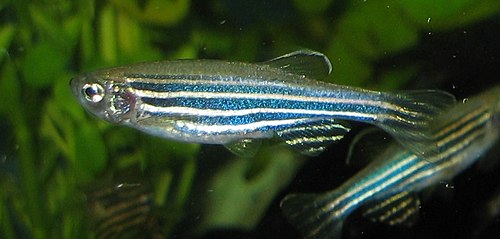
- The zebra danio is a small, fast minnow from the streams and floodplains of South Asia, marked with horizontal blue-gold stripes.
- Widely used as a laboratory model organism, it is one of the hardiest and most adaptable aquarium fish available.
- It is an excellent beginner species, tolerant of a wide temperature range including cooler rooms.
- Avoid dyed or hybrid colour variants where possible, and never keep it in a tiny tank, as its constant activity demands swimming space.
Housing
- Keep a shoal of at least six in 75 litres (20 gallons) or more, well filtered.
- They thrive at 18-24C and do not strictly need a heater in a stable, room-temperature home, which suits unheated setups in temperate climates.
- These are powerful, restless swimmers that need length rather than height for laps along the tank.
- They tolerate a wide range of water chemistry and appreciate some current and a secure lid, as they are accomplished jumpers.
Diet
- Zebra danios are opportunistic omnivores that feed at the surface and in midwater.
- A quality flake or micro-pellet works as the staple, supplemented with frozen or live daphnia, brine shrimp and bloodworm for variety.
- Feed small amounts once or twice daily, only what is taken in a minute or two.
- Their fast metabolism and constant activity mean they rarely refuse food, so portion carefully to avoid overfeeding and fouling the water.
Health
- Danios are robust and disease-resistant, with most ailments arising from overcrowding, poor water quality or excessive heat rather than the fish themselves.
- Ich and fin rot are the usual concerns and clear readily with corrected conditions.
- Keeping them too warm for long periods can shorten their lifespan, so avoid over-heating the tank.
- Quarantine new arrivals, maintain weekly partial water changes, and fit a tight lid, since stress can prompt jumping.
Temperament
- Active, peaceful and confident, zebra danios shoal loosely and dash around the upper levels of the tank.
- Their speed and constant motion can unsettle very timid or slow species in a community.
- They can nip long, flowing fins when understocked, so keep six or more to channel that energy within the group.
- Pair them with similarly active, sturdy fish rather than delicate or long-finned tankmates such as bettas or fancy guppies.
A good fit for
- Beginners wanting a tough, lively first fish
- Unheated, room-temperature aquariums
- Active community tanks with sturdy species
- Keepers who enjoy constant movement
Common mistakes to avoid
- Cramped tanks restricting their fast swimming
- Keeping them too warm, shortening lifespan
- Fin-nipping when kept in too-small groups
- Open tanks they readily jump out of
Is your enclosure big enough?
Is this urgent?
In a fish tank the patient is usually the water. Test before you treat — dosing a healthy tank for a disease it does not have makes things worse.
Go now
Today
Soon
Never add a new fish to a tank that is not fully cycled, and never treat blind. A test kit is cheaper than the fish.
This is general guidance for a healthy adult, not a diagnosis. An exotics vet who knows your animal always overrides it — and the time to find one is before you need one.
What it really costs
Setup, monthly, first year and across a whole life, itemised and with the electricity worked out from the actual wattage. Published figures for the same animal disagree by a factor of four, so the calculator shows ranges rather than picking one.
More Freshwater Fish guides

Spotted nano fish from cool Burmese pools

Cold-tolerant minnow for unheated tanks

Colourful labyrinth fish that lives alone
Colourful livebearer that breeds readily

Tiny, colourful livebearer for nano tanks

Hardy, colourful community livebearer