Platy
Xiphophorus maculatus
Hardy, colourful community livebearer · Beginner

- Lifespan
- 3-4 years
- Adult size
- 4-6cm / 1.5-2.5in
- Min. habitat
- Aquarium 57L+ / 15gal+, heated and filtered
- Social needs
- Social; keep in small groups
- Diet
- Omnivore (flake, pellet, veg, live foods)
- Time
- 10-15 min daily; weekly water change
- Cost
- Low
Overview
- Platies are stout, good-natured livebearers from Central America, bred into many colours and patterns such as sunset, wagtail, and mickey-mouse.
- Their hardiness and easy temperament make them a staple of beginner community tanks.
- Like their relatives the swordtail and molly, they breed readily and give birth to live fry.
- They are forgiving of minor mistakes but still need a properly cycled, heated tank to reach their full lifespan in good health.
Housing
- Provide a cycled, heated, filtered tank of at least 57 litres (15 gallons) for a small group, kept at 20-26C (68-79F).
- Platies favour slightly hard, alkaline water and an open swimming area framed by planting for cover and fry refuge.
- They are adaptable but dislike soft, acidic water and unstable parameters.
- Maintain low nitrate with weekly partial water changes.
- A secure lid is wise, and their active nature means they appreciate length of tank over height.
Diet
- Platies are omnivores with a notable appetite for vegetable matter.
- Feed a quality flake or pellet as the base, and regularly include spirulina, blanched greens, and algae alongside frozen or live treats like daphnia and bloodworms for balance.
- Offer small amounts once or twice daily, clearing within a couple of minutes.
- They readily overeat, and obesity and constipation are common in well-fed platies, so include fibre-rich greens and avoid heavy continuous feeding.
Health
- Hardy by nature, platies stay healthy with clean, stable water but are prone to the usual livebearer issues when neglected: ich, fin rot, and constipation from poor diet.
- Stable warmth and good filtration prevent most problems.
- Mass-produced stock can carry weaker genetics, so source carefully and quarantine new fish.
- Watch for a swollen belly, stringy faeces, or loss of appetite, often signs of dietary or parasite trouble that respond to corrected feeding and parameters.
Temperament
- Platies are peaceful, sociable, and active, suiting most calm community tankmates.
- They shoal loosely rather than tightly and are confident enough to occupy the middle and upper water without hiding.
- Males can pester females, so a female-biased ratio reduces stress.
- They are ready breeders, and a mixed group will steadily produce fry, which adults will eat unless dense planting offers the young somewhere to hide.
A good fit for
- Beginner community aquariums
- Keepers wanting hardy, colourful fish
- Children's first properly set-up tanks
- Planted tanks needing gentle algae grazers
Common mistakes to avoid
- Keeping in soft, acidic water
- Overfeeding leading to obesity and constipation
- Unplanned breeding from mixed-sex groups
- Skipping cycling and assuming hardiness covers it
Is your enclosure big enough?
Is this urgent?
In a fish tank the patient is usually the water. Test before you treat — dosing a healthy tank for a disease it does not have makes things worse.
Go now
Today
Soon
Never add a new fish to a tank that is not fully cycled, and never treat blind. A test kit is cheaper than the fish.
This is general guidance for a healthy adult, not a diagnosis. An exotics vet who knows your animal always overrides it — and the time to find one is before you need one.
What it really costs
Setup, monthly, first year and across a whole life, itemised and with the electricity worked out from the actual wattage. Published figures for the same animal disagree by a factor of four, so the calculator shows ranges rather than picking one.
More Freshwater Fish guides
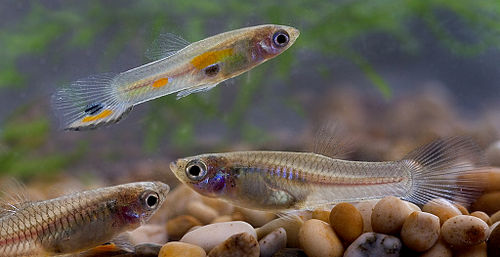
Colourful livebearer that breeds readily

Tiny, colourful livebearer for nano tanks

Sociable livebearer that prefers hard water

Active livebearer with a bladed tail

Colourful labyrinth fish that lives alone

Small orange tetra for nano planted tanks