Guppy
Poecilia reticulata
Colourful livebearer that breeds readily · Beginner
- Lifespan
- 2-3 years
- Adult size
- 3-6cm / 1.5-2.5in
- Min. habitat
- Aquarium 38L+ / 10gal+, heated and filtered
- Social needs
- Social; keep in groups
- Diet
- Omnivore (flake, micro-pellet, veg, live foods)
- Time
- 10-15 min daily; weekly water change
- Cost
- Low
Overview
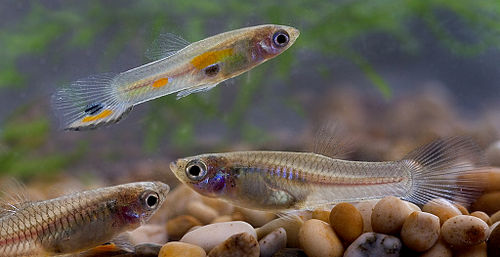
- Guppies are small, peaceful livebearers native to northeastern South America, with males known for their patterned tails.
- Hardy and adaptable, they are among the most widely kept aquarium fish.
- They breed readily in the home aquarium, which is part of their appeal and also their main pitfall.
- A mixed-sex tank quickly fills with fry, so plan for population control or a single-sex group before you buy.
Housing
- A heated, filtered, cycled tank of at least 38 litres (10 gallons) suits a small group.
- Hold the temperature at 22-26C (72-79F).
- Guppies prefer slightly hard, alkaline water and appreciate planting for cover and for fry to hide among.
- They are gentle swimmers and dislike strong currents.
- Keep nitrate low with weekly partial water changes, as guppies are sensitive to dirty water despite their reputation for toughness.
- A secure lid prevents the occasional jumper from escaping.
Diet
- Guppies are omnivores and do best on a varied diet.
- Offer a quality flake or micro-pellet as the staple, rotating in blanched vegetables, spirulina, and frequent treats of frozen or live brine shrimp, daphnia, and bloodworms for colour and condition.
- Feed small amounts once or twice daily, only what is cleared in a minute or two.
- Their small stomachs make overfeeding easy, which fouls water and contributes to obesity and bloating in well-stocked tanks.
Health
- Mass-bred guppies can be genetically weak, so buy from reputable sources and quarantine new arrivals.
- Common problems include fin rot, ich, and protozoan ailments that follow chilling or unstable parameters.
- Stable warmth and clean water prevent most issues.
- Watch for clamped fins, white spots, or a wasting, hollow belly that can signal internal parasites.
- Acclimatise slowly to avoid temperature and pH shock, and avoid overcrowding, which is a frequent trigger for outbreaks.
Temperament
- Guppies are sociable, active, and peaceful, best kept in groups where they shoal loosely.
- Males court females persistently, so a higher ratio of females, or a males-only tank, reduces harassment.
- They mix well with other calm community species but may have their fins nipped by boisterous tankmates.
- A mixed group will produce fry continuously, which adults will eat unless plenty of cover is provided.
A good fit for
- Absolute beginners and children's first tanks
- Community aquariums with peaceful species
- Keepers who enjoy colour and breeding
- Planted nano and shelf aquariums
Common mistakes to avoid
- Unplanned breeding overwhelming the tank
- Buying weak, mass-bred stock prone to disease
- Keeping males with too few females
- Assuming hardiness means dirty water is fine
Is your enclosure big enough?
Is this urgent?
In a fish tank the patient is usually the water. Test before you treat — dosing a healthy tank for a disease it does not have makes things worse.
Go now
Today
Soon
Never add a new fish to a tank that is not fully cycled, and never treat blind. A test kit is cheaper than the fish.
This is general guidance for a healthy adult, not a diagnosis. An exotics vet who knows your animal always overrides it — and the time to find one is before you need one.
What it really costs
Setup, monthly, first year and across a whole life, itemised and with the electricity worked out from the actual wattage. Published figures for the same animal disagree by a factor of four, so the calculator shows ranges rather than picking one.
More Freshwater Fish guides

Tiny, colourful livebearer for nano tanks

Hardy, colourful community livebearer

Sociable livebearer that prefers hard water

Active livebearer with a bladed tail

Colourful labyrinth fish that lives alone

Small orange tetra for nano planted tanks