Black Skirt Tetra
Gymnocorymbus ternetzi
Hardy deep-bodied shoaler with a dark fin · Beginner

- Lifespan
- 3-5 years
- Adult size
- 5-6 cm / 2-2.5 in
- Min. habitat
- Aquarium 75L+ / 20gal+, heated and filtered
- Social needs
- Shoaler; keep 6+ together
- Diet
- Omnivore; flakes, pellets, frozen foods
- Time
- Low; daily feeding, weekly water change
- Cost
- Low
Overview
- The black skirt tetra is a deep-bodied characin from the Paraguay and Guapore river basins, recognised by its silvery-grey body, twin black bars and dark flowing anal fin.
- Larger and sturdier than most tetras, it is a long-standing community favourite.
- It is hardy and adaptable, tolerating a range of conditions, which makes it beginner-friendly.
- Be wary of dyed or injected colour variants, which raise welfare concerns and often show reduced vitality.
Housing
- Keep a shoal of at least six in 75 litres (20 gallons) or more, filtered and heated to 22-27C.
- Their adult size and active swimming call for more horizontal space than tiny tetras, with planted edges and driftwood framing open swimming room.
- They accept a range of soft to moderately hard water but value stability most.
- A well-cycled tank with steady parameters and gentle to moderate flow suits their robust temperament.
Diet
- Black skirts are unfussy omnivores.
- A quality flake or pellet forms a reliable staple, rotated with frozen or live bloodworm, daphnia and brine shrimp, plus occasional plant-based or algae food for balance.
- Feed small amounts once or twice daily, only what is consumed in a minute or two.
- They eat enthusiastically and can outcompete shy tankmates, so make sure slower feeders also reach the food.
Health
- These are among the more disease-resistant tetras, with most problems traceable to chilling, poor water quality or stress.
- Ich and fin rot are the usual concerns and respond well to corrected conditions and early treatment.
- Long-finned varieties are more prone to fin nipping and damage.
- Quarantine new stock, maintain weekly partial water changes, and avoid dyed or injected colour-variant fish, which carry higher disease and mortality risk.
Temperament
- Generally peaceful but semi-active, black skirts can become nippy, especially toward long, flowing fins, when kept in groups that are too small.
- A shoal of six or more diffuses this behaviour and keeps them calmer.
- They suit lively community tanks with similarly sized, robust species and open swimmers.
- Avoid pairing them with slow, long-finned fish such as bettas or fancy guppies, and keep them in numbers to reduce fin-nipping.
A good fit for
- Beginners wanting a hardy, forgiving shoaler
- Active mid-sized community aquariums
- Keepers in areas with variable tap water
- Those who like a bold, contrasting fish
Common mistakes to avoid
- Fin-nipping when kept in too-small groups
- Pairing with slow, long-finned tankmates
- Buying dyed or injected colour variants
- Undersized tanks limiting their active swimming
Is your enclosure big enough?
Is this urgent?
In a fish tank the patient is usually the water. Test before you treat — dosing a healthy tank for a disease it does not have makes things worse.
Go now
Today
Soon
Never add a new fish to a tank that is not fully cycled, and never treat blind. A test kit is cheaper than the fish.
This is general guidance for a healthy adult, not a diagnosis. An exotics vet who knows your animal always overrides it — and the time to find one is before you need one.
What it really costs
Setup, monthly, first year and across a whole life, itemised and with the electricity worked out from the actual wattage. Published figures for the same animal disagree by a factor of four, so the calculator shows ranges rather than picking one.
More Freshwater Fish guides

Schooling characin for mature, planted tanks

Blue-and-red shoaler from soft blackwater

Small orange tetra for nano planted tanks

The tightest schooler in the hobby, with a built-in stress gauge

Colourful labyrinth fish that lives alone
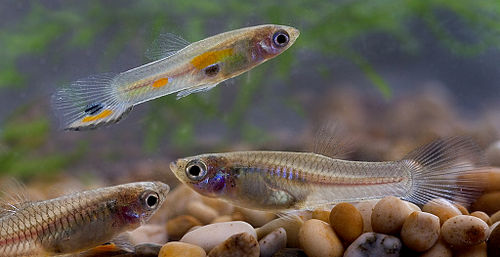
Colourful livebearer that breeds readily