Harlequin Rasbora
Trigonostigma heteromorpha
Copper shoaler with a black triangular patch · Beginner

- Lifespan
- 5-8 years
- Adult size
- 4-5 cm / 1.5-2 in
- Min. habitat
- Aquarium 60L+ / 15gal+, heated and filtered
- Social needs
- Shoaler; keep 8-10+ together
- Diet
- Omnivore; micro pellets, flakes, frozen foods
- Time
- Low; daily feeding, weekly water change
- Cost
- Low
Overview
- The harlequin rasbora is a peaceful shoaling fish from the soft, acidic forest streams and peat swamps of Southeast Asia.
- Its warm copper-pink body and black triangular patch make a dense shoal an attractive sight in a planted community tank.
- Hardy, long-lived and captive-bred, it is a good beginner fish that adapts well once a tank is cycled.
- It rewards patience with years of reliable colour and calm behaviour in the right soft-water setup.
Housing
- Keep a shoal of eight to ten or more in 60 litres (15 gallons) or larger, filtered and heated to 23-27C.
- They look best against dark substrate in a planted, dimly lit tank with driftwood and light tannin staining that echoes their native swamps.
- They prefer soft, slightly acidic water but adapt to moderately hard supplies if kept stable.
- Provide gentle flow, open midwater swimming space and planted cover so the shoal feels secure enough to display full colour.
Diet
- Harlequins are easy omnivores with small mouths.
- A quality micro-pellet or flake forms a dependable staple, rotated with frozen or live daphnia, baby brine shrimp, cyclops and finely chopped bloodworm for variety and condition.
- Feed small amounts once or twice daily, only what is consumed within a minute or two.
- Varied feeding supports their colour and the general health that helps them reach their long lifespan.
Health
- Harlequins are robust and disease-resistant, with most problems traceable to chilling, poor water quality or stress rather than weak stock.
- Ich and fin rot are the usual concerns and respond quickly to corrected conditions and prompt treatment.
- Stable warmth, soft water and weekly partial changes prevent the majority of issues.
- Quarantine new arrivals, acclimatise gently, and keep them in a settled, well-cycled tank, where they prove trouble-free over many years.
Temperament
- Peaceful, social and tightly shoaling when kept in good numbers, harlequins glide calmly through midwater and rarely trouble their tankmates.
- A larger group settles faster, colours up and swims more openly.
- They are good community fish alongside other gentle soft-water species such as small tetras, corydoras, dwarf cichlids and shrimp.
- Avoid large, boisterous or predatory tankmates that intimidate the shoal or keep these mild fish hiding among the plants.
A good fit for
- Beginners wanting a peaceful, long-lived shoal
- Planted soft-water community aquariums
- Keepers seeking calm, reliable colour
- Shrimp-friendly and biotope-style tanks
Common mistakes to avoid
- Keeping too few, causing chronic stress
- Hard, alkaline water dulling their colour
- Adding them to an immature, uncycled tank
- Housing with large or aggressive tankmates
Is your enclosure big enough?
Is this urgent?
In a fish tank the patient is usually the water. Test before you treat — dosing a healthy tank for a disease it does not have makes things worse.
Go now
Today
Soon
Never add a new fish to a tank that is not fully cycled, and never treat blind. A test kit is cheaper than the fish.
This is general guidance for a healthy adult, not a diagnosis. An exotics vet who knows your animal always overrides it — and the time to find one is before you need one.
What it really costs
Setup, monthly, first year and across a whole life, itemised and with the electricity worked out from the actual wattage. Published figures for the same animal disagree by a factor of four, so the calculator shows ranges rather than picking one.
More Freshwater Fish guides

Chilli-red speck from Borneo's peat swamps

Colourful labyrinth fish that lives alone
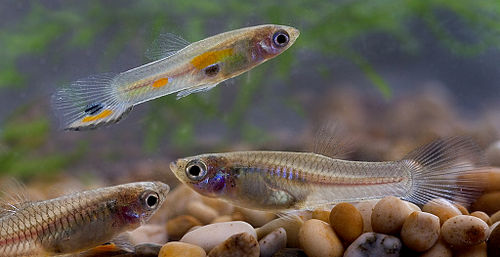
Colourful livebearer that breeds readily

Tiny, colourful livebearer for nano tanks

Hardy, colourful community livebearer

Active livebearer with a bladed tail