Common Goldfish
Carassius auratus
Long-lived coldwater fish, not bowl pets · Advanced

- Lifespan
- 15-25+ years
- Adult size
- 20-30cm (single-tail)
- Min. habitat
- Aquarium 280L+ / 75gal+ for one, +75L per extra fish; ponds ideal
- Social needs
- Social; keep 2+ goldfish together
- Diet
- Omnivore (sinking pellets, blanched greens, low-protein)
- Time
- Moderate-high (heavy waste, frequent water changes)
- Cost
- Medium
Overview
- The common goldfish is a coldwater fish descended from wild Asian carp, not a disposable bowl fish.
- Kept properly, single-tail goldfish reach 20-30cm and commonly live past 15 years, with pond fish sometimes exceeding 25.
- They are hardy and personable, but their adult size and heavy waste output make them more demanding than their low price suggests.
- They belong in large aquaria or, ideally, garden ponds.
Housing
- Goldfish are coldwater fish that thrive at roughly 18-22C with no heater needed; single-tails do well in unheated rooms or outdoor ponds and tolerate seasonal cooling.
- Provide a fully cycled tank of at least 280L for one fish, adding around 75L per additional goldfish, with strong filtration sized above the rated load.
- Keep ammonia and nitrite at zero and nitrate below 40ppm; a pH of 7.0-8.0 suits them.
- Avoid sharp decor, do weekly 30-50% water changes, and never use a bowl, which stunts and kills them.
Diet
- Goldfish are omnivores prone to obesity and constipation, so feed a quality sinking goldfish pellet as the staple plus plenty of blanched vegetables such as peas, spinach and courgette.
- Pre-soaking dry food helps, as gulping air at the surface can contribute to swim-bladder problems.
- Feed small amounts once or twice daily, only what they finish in a couple of minutes.
- Avoid high-protein tropical foods and overfeeding, the leading cause of disease and fouled water in this heavy-waste species.
Health
- Goldfish are hardy but pollution-sensitive, and commonly suffer ammonia poisoning, fin rot, ich and swim-bladder problems, nearly all traceable to undersized tanks, poor filtration or overfeeding.
- Watch for clamped fins, gasping at the surface, or floating and sinking abnormally.
- Maintain clean water and stable temperature to prevent most issues.
- Quarantine new fish for 2-4 weeks, and treat ich with appropriate medication.
- A varied diet and roomy housing keep them healthy for many years.
Temperament
- Goldfish are peaceful, curious and trainable, learning to beg at feeding time and recognise their keepers.
- They are social and do best in small groups of their own kind rather than alone.
- Keep them only with other goldfish or similarly cool, slow swimmers; they will outcompete or eat tiny tankmates and are too messy for delicate community fish.
- Mixing fast single-tails with slow fancy varieties is unwise, as commons outcompete fancies for food.
A good fit for
- Pond keepers with outdoor space
- Patient owners wanting a long-lived pet
- Those willing to over-filter a large tank
- Keepers who prefer coldwater over tropical setups
Common mistakes to avoid
- Bowls and tiny tanks that stunt and kill
- Overfeeding causing fouled water and constipation
- Underestimating adult size and 15+ year lifespan
- Mixing with delicate or tiny community fish
Is your enclosure big enough?
Is this urgent?
In a fish tank the patient is usually the water. Test before you treat — dosing a healthy tank for a disease it does not have makes things worse.
Go now
Today
Soon
Never add a new fish to a tank that is not fully cycled, and never treat blind. A test kit is cheaper than the fish.
This is general guidance for a healthy adult, not a diagnosis. An exotics vet who knows your animal always overrides it — and the time to find one is before you need one.
What it really costs
Setup, monthly, first year and across a whole life, itemised and with the electricity worked out from the actual wattage. Published figures for the same animal disagree by a factor of four, so the calculator shows ranges rather than picking one.
More Freshwater Fish guides

Long-lived coldwater pet, not a bowl fish

Demanding, disc-shaped Amazon cichlids

Colourful labyrinth fish that lives alone
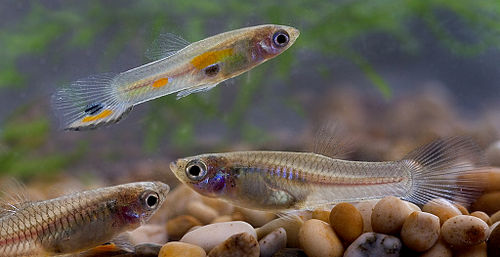
Colourful livebearer that breeds readily

Tiny, colourful livebearer for nano tanks

Hardy, colourful community livebearer