Cherry Barb
Puntius titteya
Peaceful shoaling barb with deep-red breeding males · Beginner

- Lifespan
- 4-6 years
- Adult size
- Up to 5 cm (2 in)
- Min. habitat
- Aquarium 75L+ / 20gal+
- Social needs
- Shoaling - keep 6+ together
- Diet
- Omnivore
- Time
- Low-moderate (daily feed, weekly water changes)
- Cost
- Low
Overview
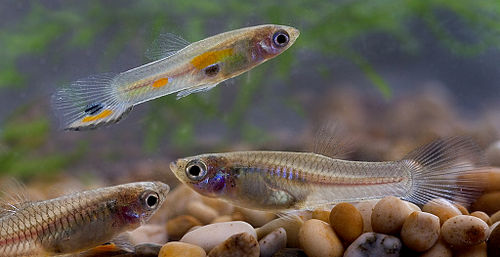
- The Cherry Barb is a small cyprinid from Sri Lanka, named for the deep red that males flush during spawning and display.
- It is less prone to fin-nipping than most barbs, which makes it a good choice for calm community tanks.
- This is a peaceful, active mid-water swimmer that suits planted aquariums.
- It tolerates a fairly wide range of conditions, which gives beginners some margin for the small errors common while learning to keep fish.
Housing
- House a group in a tank of at least 75 litres (20 gallons) with a secure lid, gentle filtration, and dense planting alongside open swimming lanes.
- Aim for 23-27C (73-81F), pH 6.0-7.5, and soft to moderately hard water.
- The tank must be fully cycled before fish arrive.
- Dark substrate and a planted background bring out the males' colour and reduce skittishness.
- Keep nitrate below 20-40 ppm with weekly partial water changes, and use a tight cover, as these fish occasionally jump.
Diet
- Cherry Barbs are omnivores that take most foods readily.
- Feed a quality micro-pellet or flake as the staple, supplemented with small portions of frozen or live daphnia, bloodworm, and brine shrimp to support colour and spawning condition.
- Feed once or twice daily, only what they finish in a couple of minutes.
- Overfeeding fouls the water and is a leading avoidable cause of disease, so keep meals small and include some plant-based food or blanched vegetable matter.
Health
- This is a robust species with few inherent problems; most illness traces back to poor water quality, overstocking, or adding fish to an uncycled tank.
- Watch for ich (white spots) after temperature swings or new additions, and for fin damage from rougher tankmates.
- Quarantine new fish for two to four weeks where possible, and check daily for clamped fins, rapid breathing, or loss of appetite.
- Stable parameters and clean water prevent most issues in this species.
Temperament
- Cherry Barbs are peaceful and somewhat shy.
- They show their best colour and feel secure only in a shoal of six or more; lone fish or pairs tend to hide and stay pale.
- They mix well with other calm community fish such as rasboras, small tetras, corydoras, and adult dwarf shrimp.
- Avoid large, aggressive, or very boisterous tankmates, which leave these gentle barbs stressed and hiding.
A good fit for
- First-time fishkeepers
- Peaceful planted community tanks
- Smaller aquariums (75L+)
- Keepers wanting colour without aggression
Common mistakes to avoid
- Keeping fewer than 6 (causes stress, hiding)
- Adding fish to an uncycled tank
- Overfeeding and resulting poor water quality
- Housing with large or aggressive tankmates
Is your enclosure big enough?
Is this urgent?
In a fish tank the patient is usually the water. Test before you treat — dosing a healthy tank for a disease it does not have makes things worse.
Go now
Today
Soon
Never add a new fish to a tank that is not fully cycled, and never treat blind. A test kit is cheaper than the fish.
This is general guidance for a healthy adult, not a diagnosis. An exotics vet who knows your animal always overrides it — and the time to find one is before you need one.
What it really costs
Setup, monthly, first year and across a whole life, itemised and with the electricity worked out from the actual wattage. Published figures for the same animal disagree by a factor of four, so the calculator shows ranges rather than picking one.
More Freshwater Fish guides

Active striped shoaler with a fin-nipping streak

Colourful labyrinth fish that lives alone
Colourful livebearer that breeds readily

Tiny, colourful livebearer for nano tanks

Hardy, colourful community livebearer

Active livebearer with a bladed tail