Lawnmower Blenny
Salarias fasciatus
Comical algae grazer with plenty of personality · Beginner
- Lifespan
- 4-6 years
- Adult size
- 10-13cm (4-5in)
- Min. habitat
- Aquarium 110L+ / 30gal+
- Social needs
- One per tank unless the system is large
- Diet
- Herbivore, marine algae
- Time
- Low
- Cost
- Medium
Overview
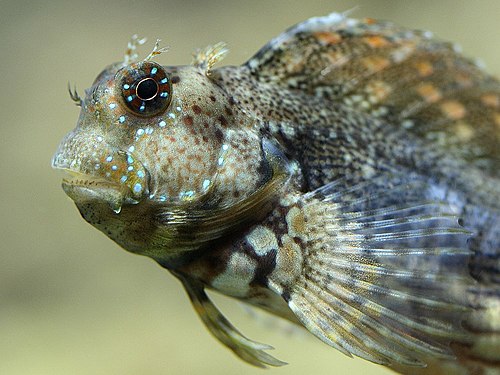
- The Lawnmower Blenny is a hardy, characterful herbivore named for its habit of grazing algae off rock and glass.
- With perching pectoral fins, expressive eyes, and constant activity, it is a popular beginner reef fish.
- It is reef-safe and useful for nuisance algae, but it needs an established tank with a real algae supply.
- Keepers must be ready to supplement food once the algae is grazed down.
Housing
- House in a mature reef of at least 110L (30 gallons) with plenty of live rock covered in algae film and perches to rest on.
- An established tank with diatom and green algae growth provides natural grazing.
- Keep temperature 24-27C (75-81F), salinity 1.024-1.026, pH 8.1-8.4, and ammonia and nitrite at zero.
- A tank that is too clean or too new will leave this grazer underfed.
Diet
- Primarily a herbivore, it grazes hair algae, diatoms, and film algae from rock and glass.
- Once natural algae is depleted, supplement with dried nori, seaweed sheets, spirulina flakes, and algae-based pellets.
- Many lawnmower blennies slowly starve in tanks without enough algae, so a sunken belly signals the need to feed more vegetable matter.
- Some will eventually accept meaty frozen foods as well.
Health
- Hardy and relatively disease-resistant compared with many marine fish, but it still benefits from quarantine and stable water.
- The most common cause of death is starvation in tanks with insufficient algae rather than illness.
- Watch the belly profile: a pinched, concave stomach means it is not getting enough food.
- Provide constant grazing material and supplemental nori to keep weight and energy up.
Temperament
- Peaceful toward most tankmates but territorial toward other blennies and similar bottom-dwelling fish.
- Keep only one lawnmower blenny per tank unless the system is large, to avoid squabbling.
- It is an amusing, interactive fish that perches openly, hops between rocks, and shifts colour with mood.
- It generally ignores corals and invertebrates, making it a reliable, peaceful reef community member.
A good fit for
- Beginners wanting a hardy, fun fish
- Reef tanks with nuisance algae
- Keepers who will supplement with nori
- Community reefs needing a peaceful grazer
Common mistakes to avoid
- Starves in tanks lacking enough algae
- Watch for a pinched, concave belly
- Keeping two blennies together causes fights
- Adding to a brand-new, algae-free tank
Is your enclosure big enough?
Is this urgent?
In a reef, stability matters more than any single target number. A parameter moving fast does more damage than a parameter sitting slightly off.
Go now
Today
Quarantine every new animal, including corals and inverts. It is the single practice that separates a reef that lasts from a reef that restarts.
This is general guidance for a healthy adult, not a diagnosis. An exotics vet who knows your animal always overrides it — and the time to find one is before you need one.
What it really costs
Setup, monthly, first year and across a whole life, itemised and with the electricity worked out from the actual wattage. Published figures for the same animal disagree by a factor of four, so the calculator shows ranges rather than picking one.
More Saltwater Fish guides

Golden, eel-like swimmer with bold charm

Two-toned charmer with a big personality

Charismatic nano algae-grazer with cartoon eyes

Hardy, beginner-friendly reef-tank clownfish

Purple-and-gold peaceful reef basslet

Slender dartfish with a flicking dorsal flag