Ocellaris Clownfish
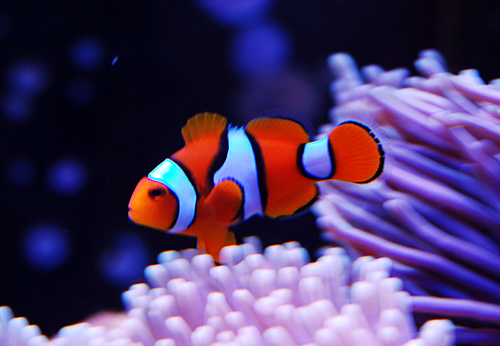
Amphiprion ocellaris
Hardy, beginner-friendly reef-tank clownfish · Beginner

- Lifespan
- 6-10 years
- Adult size
- 7-8 cm (3 in)
- Min. habitat
- Aquarium 75L+ / 20gal+
- Social needs
- Solitary or bonded pair; not a shoaling fish
- Diet
- Omnivore (marine pellets, frozen, algae)
- Time
- Daily feeding; weekly water testing/changes
- Cost
- Medium
Overview
- The Ocellaris is the orange-and-white clownfish often called "Nemo" and is a good marine fish for beginners.
- Most stock sold today is captive-bred, which makes it hardy, adaptable to aquarium foods, and less prone to disease than wild-caught fish.
- It is also among the milder-tempered clownfish.
- It does not need a host anemone to thrive, which is helpful because anemones are demanding and better suited to experienced keepers.
- A single fish or a bonded pair works well.
- Its bold, personable behaviour makes it a watchable centrepiece.
Housing
- A cycled tank of 75L (20 gal) or more suits a pair, with live rock for territory and a tight-fitting lid since clownfish can jump.
- Maintain salinity 1.024-1.026, temperature 24-27°C (75-80°F), pH 8.1-8.4, with ammonia and nitrite at zero and nitrate below 20 ppm.
- Add fish only to a fully nitrogen-cycled system; new tanks need several weeks to establish beneficial bacteria.
- Stable parameters matter more than perfect ones, so use a reliable heater, a powerhead for flow, and a quality test kit.
Diet
- Ocellaris are omnivores.
- Offer a quality marine pellet or flake as a staple, supplemented with frozen mysis and brine shrimp and occasional algae-based foods.
- Feed small amounts once or twice daily, only what the fish finish in a couple of minutes, to keep nitrate low.
- Captive-bred fish accept prepared foods readily, so weaning is rarely an issue.
- Vary the diet for colour and immune health, and soak frozen foods in a vitamin supplement now and then.
- Avoid overfeeding, the most common cause of poor water quality.
Health
- Clownfish are robust but susceptible to marine ich (Cryptocaryon) and the clownfish-specific Brooklynella if stressed or kept in poor water.
- Quarantining new arrivals and maintaining stable salinity and temperature prevent most outbreaks.
- Watch for rapid breathing, scratching against rock, or white spots, which signal parasites.
- Good filtration, regular water changes, and a varied diet support the immune system.
- Captive-bred stock generally ships healthier than wild-caught fish.
Temperament
- Ocellaris are peaceful by clownfish standards and reef-safe, generally ignoring corals and most tankmates.
- A bonded pair forms a hierarchy, with the larger fish becoming female; all clownfish begin as males and the dominant one changes sex.
- They can be mildly territorial around their chosen spot but rarely cause real trouble.
- Keep only one fish or one bonded pair, since two unbonded clownfish, especially of different species, often fight.
- They make confident, interactive display fish.
A good fit for
- First-time marine aquarium keepers
- Reef tanks (reef-safe)
- Keepers wanting a hardy centrepiece
- Captive-bred ethical purchasers
Common mistakes to avoid
- Adding fish to an uncycled tank
- Assuming they need an anemone to survive
- No lid - clownfish jump
- Housing two unbonded clownfish that fight
Is your enclosure big enough?
Is this urgent?
In a reef, stability matters more than any single target number. A parameter moving fast does more damage than a parameter sitting slightly off.
Go now
Today
Quarantine every new animal, including corals and inverts. It is the single practice that separates a reef that lasts from a reef that restarts.
This is general guidance for a healthy adult, not a diagnosis. An exotics vet who knows your animal always overrides it — and the time to find one is before you need one.
What it really costs
Setup, monthly, first year and across a whole life, itemised and with the electricity worked out from the actual wattage. Published figures for the same animal disagree by a factor of four, so the calculator shows ranges rather than picking one.
More Saltwater Fish guides

Large, boldly coloured and notably aggressive clownfish
The "true" clownfish, inked with bold black borders

The hardy yellowtail that hosts in anything

Purple-and-gold peaceful reef basslet

Slender dartfish with a flicking dorsal flag

Sand-sifting goby that shares a pistol-shrimp burrow