Midas Blenny
Ecsenius midas
Golden, eel-like swimmer with bold charm · Beginner

- Lifespan
- 4-6 years
- Adult size
- 10-13cm (4-5in)
- Min. habitat
- Aquarium 110L+ / 30gal+
- Social needs
- One per tank unless a bonded pair
- Diet
- Omnivore, zooplankton and algae
- Time
- Low
- Cost
- Medium
Overview
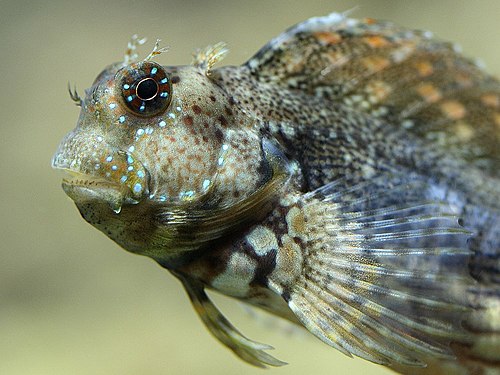
- The Midas Blenny is a golden-yellow fish with bright eyes and a graceful, eel-like swimming style unusual among blennies.
- Hardy and personable, it is a good beginner marine fish that often hovers in open water rather than perching.
- Unlike many blennies it is a midwater feeder that associates with the anthias it naturally schools with.
- It can shift colour from gold to bluish depending on mood and surroundings.
Housing
- Provide a reef tank of at least 110L (30 gallons) with live rock offering caves and crevices it can dart into and claim.
- It favours a hole or tube as a base from which it watches the tank.
- Maintain temperature 24-27C (75-81F), salinity 1.024-1.026, pH 8.1-8.4, and ammonia and nitrite at zero.
- A secure rockwork retreat makes for a confident, frequently visible fish.
Diet
- An omnivore that feeds largely on zooplankton in the water column, supplemented by some algae.
- Offer frozen mysis and brine shrimp, marine flakes and pellets, and algae-based foods one to two times daily.
- It readily accepts prepared foods and is an enthusiastic feeder, making it easy to keep well-nourished.
- A varied diet maintains its golden colour and active behaviour.
Health
- Hardy and adaptable, with fewer disease problems than many marine fish, though quarantine is still wise.
- Stable water and a varied diet keep it healthy and brightly coloured for years.
- Watch for hiding, faded colour, or refusal to eat as early warning signs.
- Most issues arise from poor water quality, aggressive tankmates, or an immature tank rather than inherent fragility.
Temperament
- Peaceful toward most species but territorial toward other blennies and sometimes similar-shaped fish.
- Keep one per tank unless you obtain a bonded pair, as two unpaired individuals may fight.
- It is bold and outgoing once settled, often hovering in the open and interacting with its keeper.
- Reef-safe with corals and invertebrates, it integrates smoothly into peaceful community systems.
A good fit for
- Beginners wanting a hardy, active fish
- Reef community tanks needing midwater interest
- Keepers wanting an outgoing, visible fish
- Peaceful reefs with corals and inverts
Common mistakes to avoid
- Two unpaired blennies will fight
- Needs a secure rock retreat to settle
- Can jump; a tight-fitting lid helps
- Aggressive tankmates may bully it
Is your enclosure big enough?
Is this urgent?
In a reef, stability matters more than any single target number. A parameter moving fast does more damage than a parameter sitting slightly off.
Go now
Today
Quarantine every new animal, including corals and inverts. It is the single practice that separates a reef that lasts from a reef that restarts.
This is general guidance for a healthy adult, not a diagnosis. An exotics vet who knows your animal always overrides it — and the time to find one is before you need one.
What it really costs
Setup, monthly, first year and across a whole life, itemised and with the electricity worked out from the actual wattage. Published figures for the same animal disagree by a factor of four, so the calculator shows ranges rather than picking one.
More Saltwater Fish guides
Comical algae grazer with plenty of personality

Two-toned charmer with a big personality

Charismatic nano algae-grazer with cartoon eyes

Hardy, beginner-friendly reef-tank clownfish

Purple-and-gold peaceful reef basslet

Slender dartfish with a flicking dorsal flag