English Angora Rabbit
Oryctolagus cuniculus
A wool breed that demands near-daily grooming · Advanced
- Lifespan
- 7-11 years
- Adult size
- 2.0-3.5 kg
- Min. habitat
- Indoor pen or free-roam, 3m²+ per pair, kept clean and dry
- Social needs
- Social; keep in neutered bonded pairs
- Diet
- Unlimited hay, leafy greens, limited pellets
- Time
- Very high; daily care plus grooming
- Cost
- High
Overview
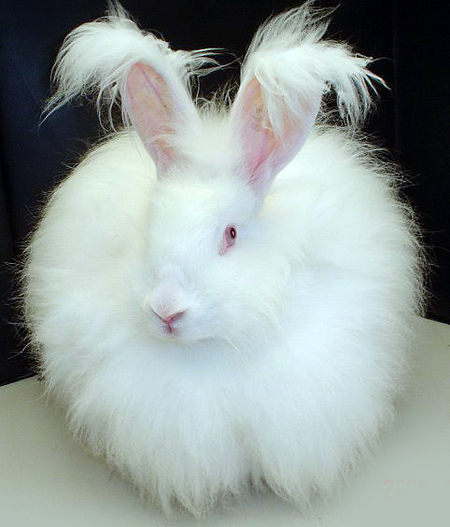
- The English Angora is a wool breed covered in long, fine fibre from its ears to its feet, including the famous facial fringe.
- It is kept both as a fibre animal and as a companion, but it is emphatically not a low-effort pet.
- The coat grows continuously and must be groomed several times a week, with the wool clipped or plucked roughly every three to four months.
- Anyone unwilling to commit to that schedule should choose a short-coated breed instead.
Housing
- House indoors in a clean, dry pen or free-roam space of at least around 3 square metres for a pair, with soft, low-mess flooring that does not tangle into the coat.
- Avoid straw and hay-storage setups that shed debris into the wool.
- Keep Angoras cool: the dense coat makes them far more heat-sensitive than other rabbits, and anything above the mid-20s Celsius is dangerous in full coat.
- Provide hides, a litter tray, and space to hop, stand, and stretch fully.
Diet
- Unlimited grass hay is even more critical for wool breeds, because the fibre keeps swallowed wool moving through the gut.
- Add daily leafy greens and a small measured portion of plain pellets.
- Provide constant fresh water and avoid sugary treats.
- Many keepers add extra long-strand fibre during moults, when wool ingestion peaks.
Health
- Wool block is the breed's defining danger: swallowed fibre can slow or stop the gut, and any Angora that stops eating is an emergency.
- Mats form quickly and pull painfully at the skin, inviting sores and flystrike, so the rear end must be checked daily in warm weather.
- Clipping every few months, plus dental checks, vaccinations, and weight monitoring, makes the Angora one of the most maintenance-heavy small pets.
- Budget for grooming tools and an exotics-savvy vet.
Temperament
- English Angoras are generally docile and tolerant, partly because frequent grooming habituates them to handling from a young age.
- Calm, routine sessions on a table or lap quickly become familiar.
- They remain prey animals that prefer four feet on the ground, and they bond strongly with a neutered companion.
- Neutering also improves litter habits and reduces uterine cancer in females.
A good fit for
- Experienced keepers who enjoy grooming and fibre craft
- Cool, indoor homes with clean, dry space
- Owners with time for near-daily coat care
- People wanting a docile, handleable rabbit
Common mistakes to avoid
- Skipping grooming until mats and sores develop
- Wool block: a silent, fast gut-stasis emergency
- Overheating in full coat during warm weather
- Underestimating the cost and time of clipping
Is your enclosure big enough?
Is this urgent?
A rabbit that stops eating is an emergency, not a wait-and-see. Nothing else on this page is as time-critical.
Go now
Today
Two rabbits are the minimum, and a bonded pair will also tell you when something is wrong — a rabbit sitting apart from its partner is worth a second look.
This is general guidance for a healthy adult, not a diagnosis. An exotics vet who knows your animal always overrides it — and the time to find one is before you need one.
Can a english angora rabbit eat that?
Hay first, greens second, everything else barely at all. A rabbit fed mostly pellets and treats is a rabbit with dental disease waiting to happen.
Never (23)
Rare treats (13)
Occasional (18)
Everyday foods (9)
That plant or food is not on our list. Do not offer it — a rabbit cannot vomit, so anything that goes in has to go all the way through. Check with an exotics vet.
A rabbit that has not eaten for 8 hours needs a vet, whatever the reason. Diet changes are the most common trigger for that, which is why new foods go in one at a time.
What it really costs
Setup, monthly, first year and across a whole life, itemised and with the electricity worked out from the actual wattage. Published figures for the same animal disagree by a factor of four, so the calculator shows ranges rather than picking one.
More Small Pets guides

The classic white-blazed breed, steady and beginner-beloved

A very small rabbit with an alert, energetic nature

A small lop-eared breed with a generally relaxed nature

A small maned breed that needs regular grooming

A very large, docile breed needing serious space

Compact lop-eared, social, hay-powered companion