Skinny Pig (Hairless Guinea Pig)
Cavia porcellus
Hairless, social, vitamin-C-dependent cuddlerIntermediate
- Lifespan
- 5-7 years
- Size
- 20-25cm
- Weight
- 700-1200g
- Social needs
- Highly social; must live with other guinea pigs
- Time
- Medium-high; warmth, feeding, daily care
- Cost
- Medium
- Diet
- Herbivore; hay-based, needs added vitamin C
Overview
What is this animal?
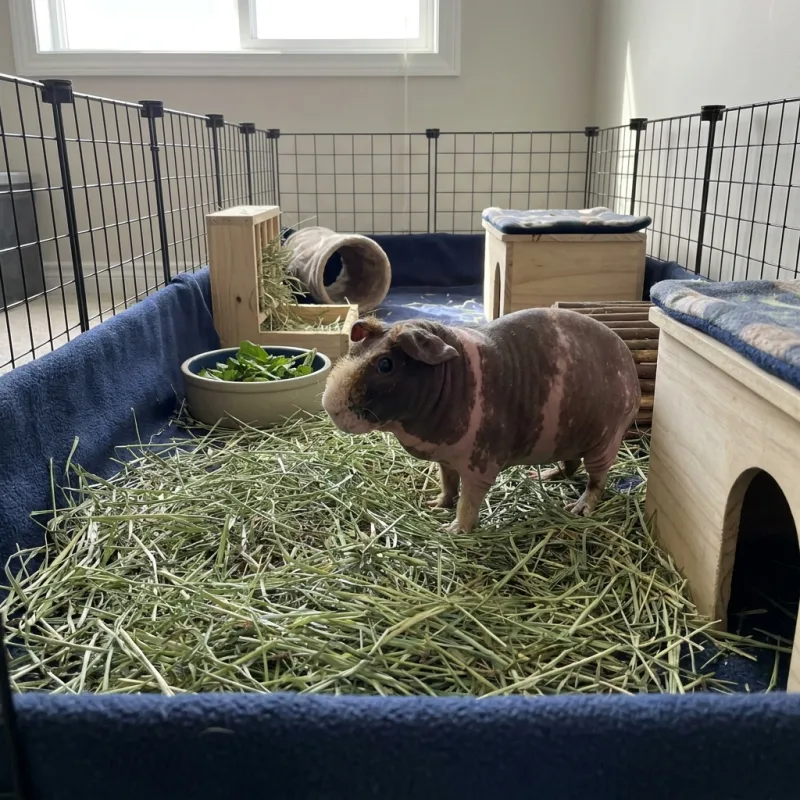
- Skinny pigs are a nearly hairless variety of domestic guinea pig, usually keeping only small patches of fuzz on the nose and feet.
- They share the gentle, vocal, herd nature of haired guinea pigs but have extra needs created by their lack of coat: more warmth, more food, and careful skin care.
- Like all guinea pigs they are strongly social and must never be kept alone.
- Their hairlessness makes them more delicate and higher-maintenance, so they suit attentive owners rather than absolute beginners.
Temperament
- Skinny pigs are gentle, timid, and highly social, communicating with an endearing range of squeaks, purrs, and excited "wheeks" at feeding time.
- They bond closely with cage-mates and, with calm regular handling, with their owners, often enjoying lap time and warmth given their need for heat.
- As prey animals they startle easily and dislike sudden grabbing, so gentle, low handling builds trust.
- They must live with at least one compatible guinea pig; a solitary guinea pig becomes lonely and stressed, which harms both behavior and health.
A good fit for
- Owners wanting an affectionate, vocal small pet
- Keepers able to maintain a warm, stable room
- Homes that will keep a bonded pair or group
- People diligent about vitamin C and diet
Common mistakes to avoid
- Keeping a single guinea pig alone
- No supplemental vitamin C (scurvy)
- Cold drafts or overheating on bare skin
- Sunburn, dryness, and wire-floor foot injuries
Enclosure
Minimum 7,000 cm² of floor (1,085 sq in) — for the pair · 120 × 60 cm
Cannot be kept alone. The minimum is 2, and the space above is for that group.
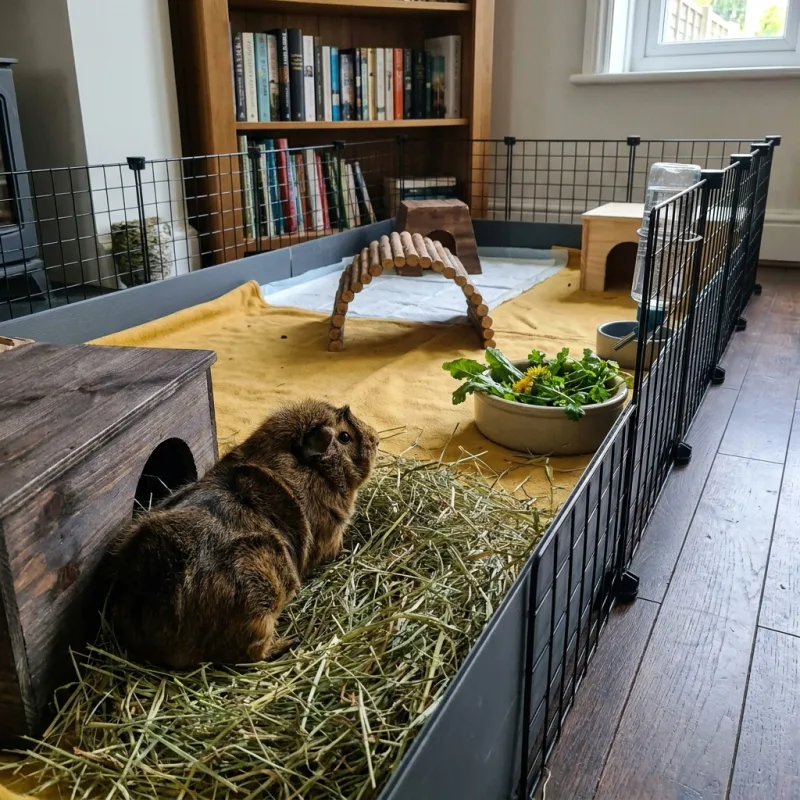
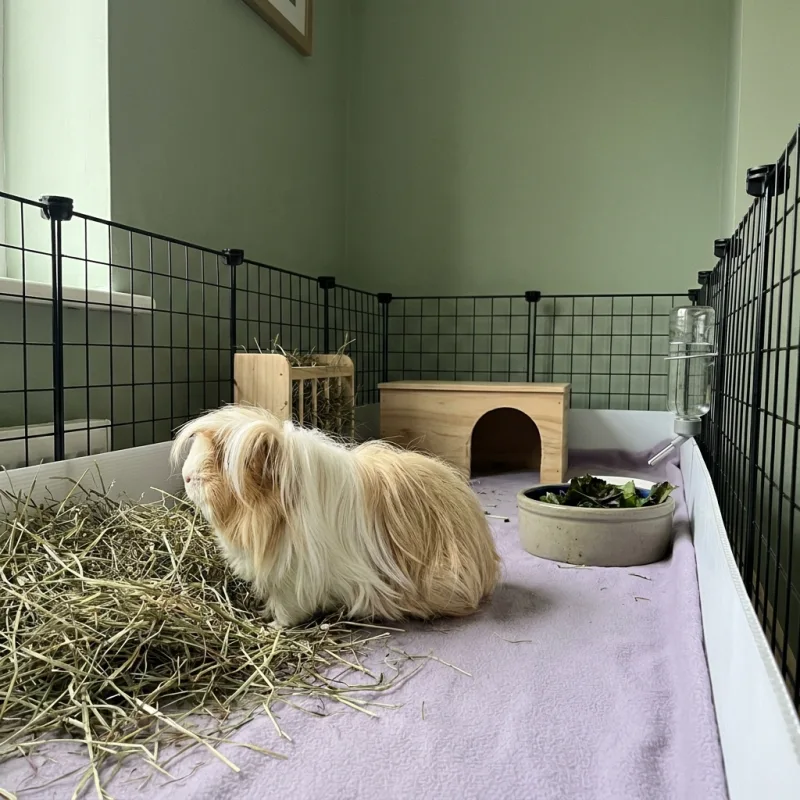
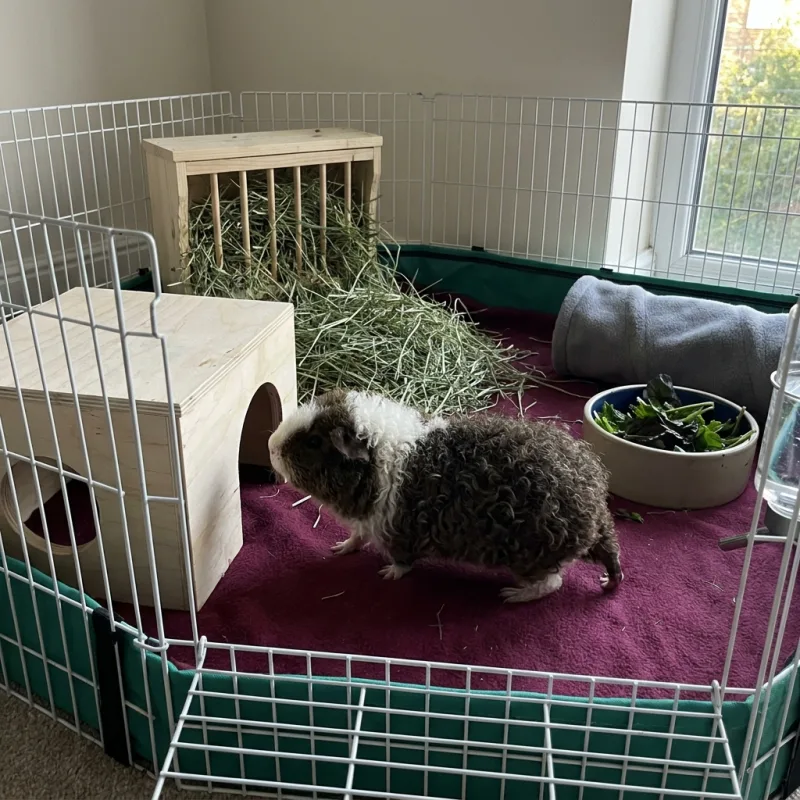
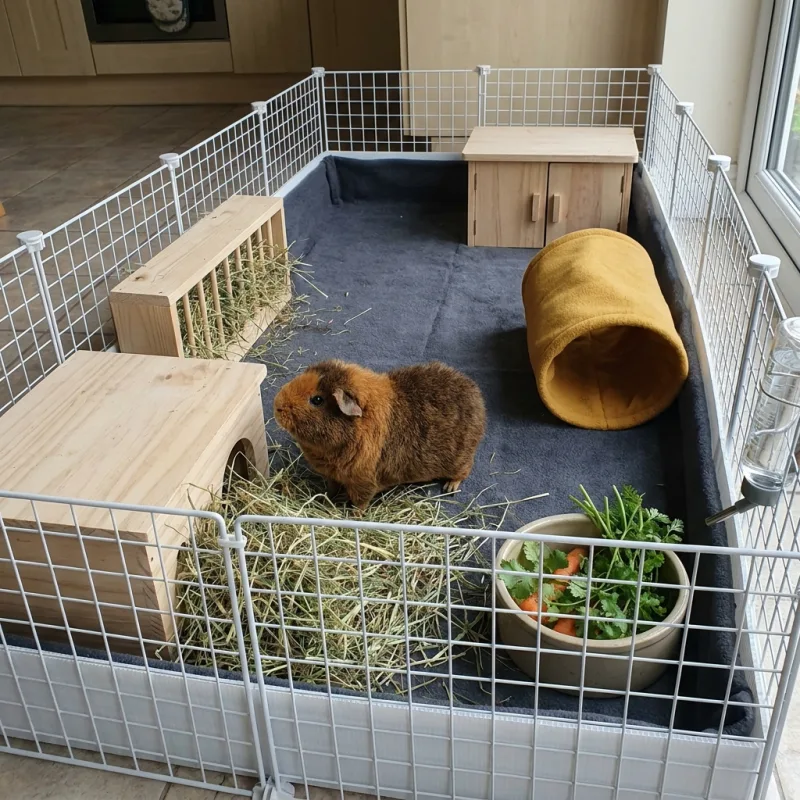
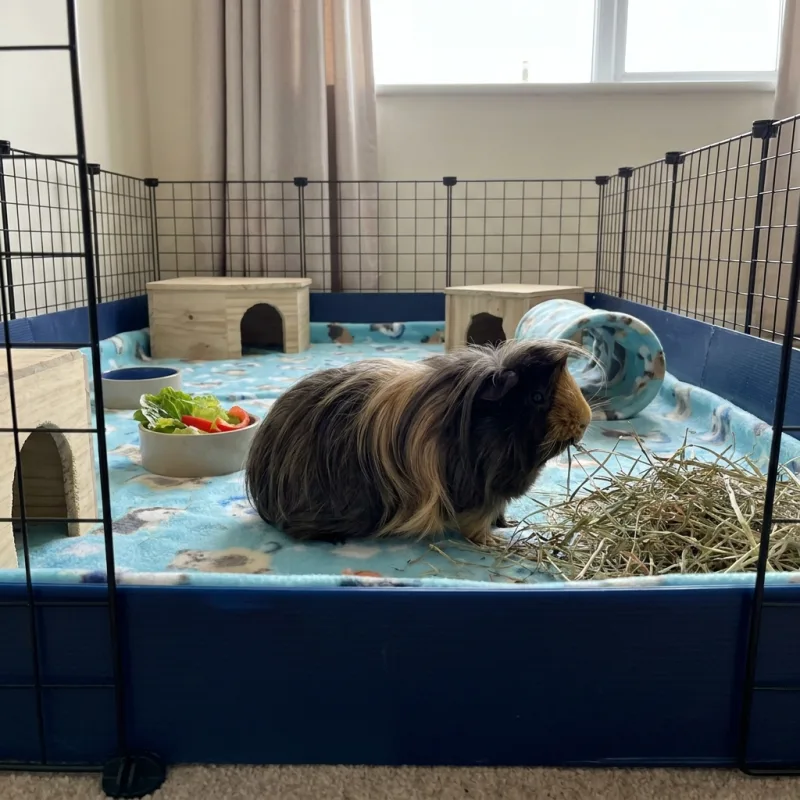
- Provide a large, single-level cage with a solid floor and soft bedding such as fleece or paper-based substrate; for a pair, aim for at least about 0.7 square metres, and more is always better.
- Avoid wire floors, which injure their feet.
- Add hides and a hay rack, and keep the cage out of drafts and direct sun.
- Because they lack insulating fur, ambient temperature is critical: keep them in a stable 20-24C range, never cold and never overheated, and provide soft warm hides.
- Their bare skin also sunburns and dries out, so no direct sunlight.
Supplies
Setup
- Cage, 1 square metre or larger for a pair
- Hides, tunnels, bowls, hay rack
- Carrier
- Digital kitchen scale
Ongoing
- Grass hay in the largest fresh box you can store
- Plain vitamin-C-stabilised guinea pig pellets
- Bell peppers (a weekly staple, not a treat)
- Mixed leafy greens for daily rotation
- Chewable or liquid vitamin C supplement for direct dosing
- Hay rack that keeps hay off the floor
- Heavy ceramic bowl plus a water bottle and brush
- Measuring cup for the pellet ration
Safe substrate: Fleece liners over an absorbent layer · Dust-extracted paper bedding · Deep soft hay over an absorbent base
Care routine
Daily
- Company and time out
- Feed and clear yesterday's leftovers
- Fresh vitamin C
- Fresh water
- Spot-clean and shake out fleece
- Top up unlimited hay
- Watch them while they are awake
Weekly
- Groom and check the rear endevery 3 days
- Hands-on health check
- Rotate enrichment
- Weigh-in
Monthly
- Deep-clean and change beddingevery 2 weeks
- Trim nailsevery 3 weeks
- Check supplies and dates
Vet: Annual exam and dental check — every 12 months (every 6 months from 4 years old)
Top resources for more info
Independent creators and organisations we would send a friend to. We have no affiliation with any of them, and nothing here is sponsored. Links checked 2026-09-19.
YouTubers
Sites
Go deeper
Diet
- Skinny pigs are herbivores that, like all guinea pigs, cannot synthesize vitamin C and will develop scurvy without a dietary source.
- Feed unlimited grass hay as the staple, a measured portion of plain vitamin-C-stabilized guinea pig pellets, and a daily variety of fresh vegetables high in vitamin C, such as bell pepper.
- Because hairless bodies burn more energy staying warm, skinny pigs often eat noticeably more than haired guinea pigs.
- Provide constant fresh water and avoid sugary fruit and muesli mixes.
- Never feed rabbit food, which lacks vitamin C.
Health
- The classic guinea pig disease is vitamin C deficiency (scurvy), causing weakness, joint pain, and poor healing.
- Hairless skin adds risks of sunburn, dryness, scratches, and fungal infections, so monitor and gently moisturize only if a vet advises.
- Dental overgrowth, bumblefoot, and respiratory infections are also common.
- They chill and overheat quickly, so temperature swings are dangerous.
- Any guinea pig that stops eating needs urgent care, as gut stasis develops fast.
- Regular weighing is the best early warning of illness.
Is your enclosure big enough?
Is this urgent?
Weigh weekly. It is the highest-value two minutes in guinea pig keeping, and it is the only way to see trouble coming.
Go now
Today
Soon
A guinea pig must not live alone. Switzerland treats keeping a single guinea pig as a welfare offence, and the practical consequence there is a rent-a-companion service for a bereaved survivor.
This is general guidance for a healthy adult, not a diagnosis. An exotics vet who knows your animal always overrides it — and the time to find one is before you need one.
Can a skinny pig (hairless guinea pig) eat that?
Guinea pigs cannot make their own vitamin C, so a daily source is not enrichment — it is the difference between health and scurvy.
The full list
Never (20)
Rare treats (13)
Occasional (18)
Everyday foods (6)
That food is not on our list. Leave it out and check with an exotics vet — guinea pigs are conservative eaters and a food they have never had can be refused for weeks afterwards.
Guinea pigs imprint on what they ate as youngsters and can refuse anything unfamiliar for life. Offer variety early and keep offering it.
What it really costs
Setup, monthly, first year and across a whole life, itemised and with the electricity worked out from the actual wattage. Published figures for the same animal disagree by a factor of four, so the calculator shows ranges rather than picking one.
Bedding and substrate
Guinea pigs do not burrow, so the priorities are absorbency, dryness and grip.
Safe
With a caveat
Never
Compare with other animals
The same axes for every animal, side by side — the way the guides are written makes that a fair comparison rather than two articles.
Guinea Pigs, side by side
Same axes, same care guides — the honest way to choose between types.
See all Guinea Pigs side by side →