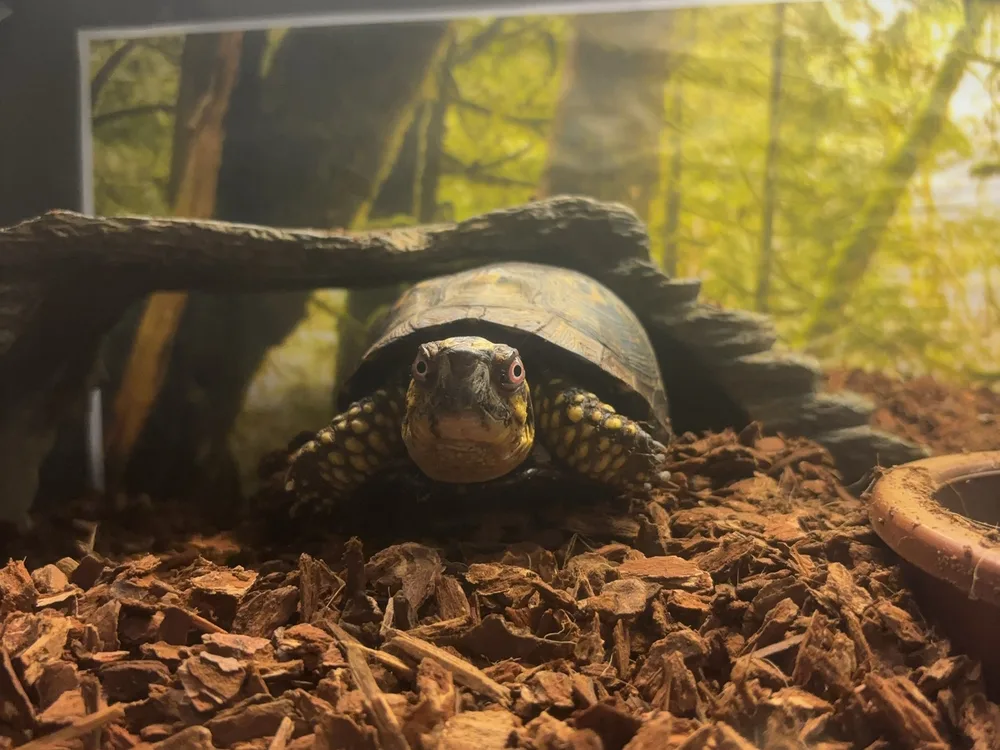
Eastern Box Turtle
Terrapene carolina carolina
Long-lived land turtle, not for wild collectionAdvanced
- Lifespan
- 50+ years
- Size
- 10-20 cm
- Social needs
- Solitary; house singly
- Time
- Medium-High; daily care, lifetime
- Cost
- Medium-High
- Diet
- Omnivore (insects, greens, fruit)
Overview
What is this animal?
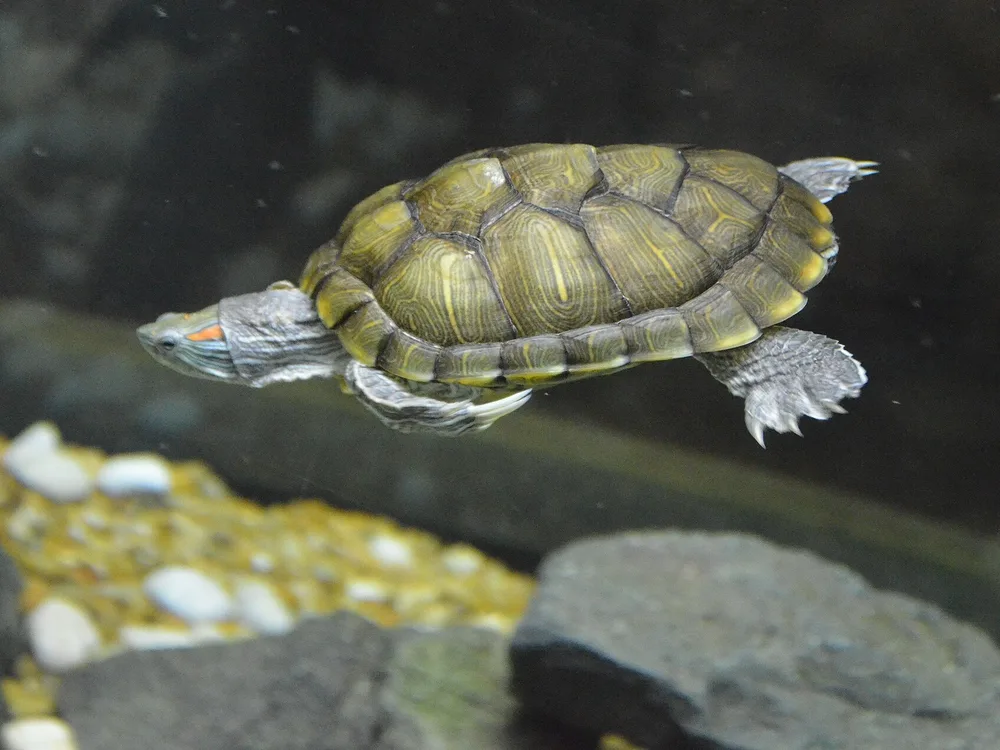
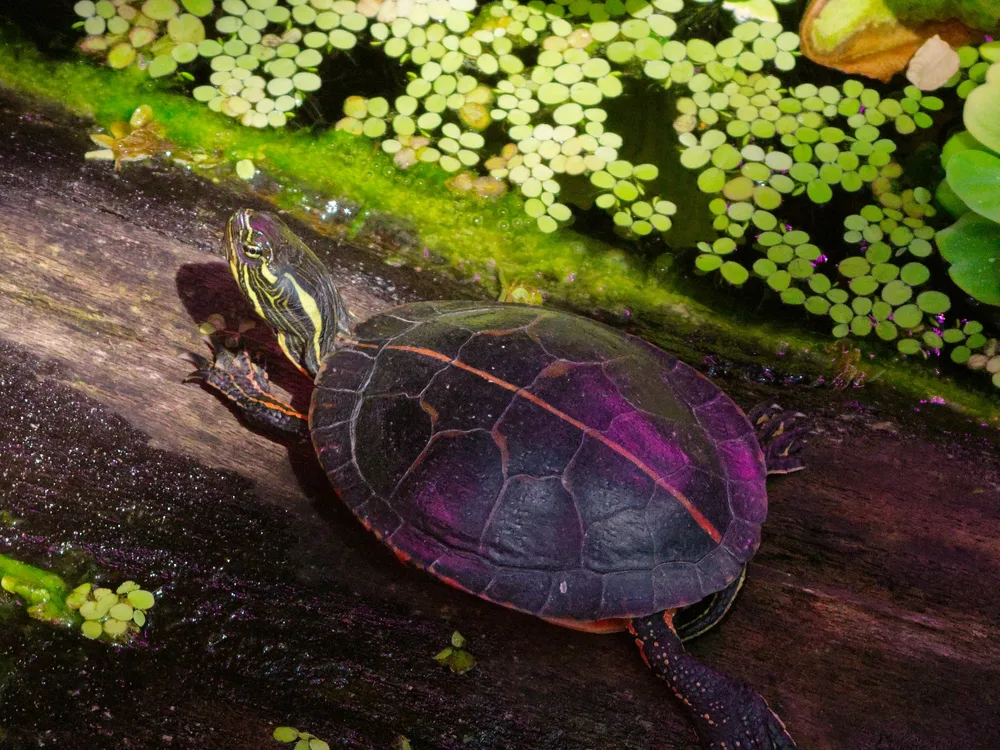
- The eastern box turtle is a small North American land turtle with a hinged plastron that lets it close up completely.
- It is known for its longevity, frequently living 50 years or more, and for being closely tied to its home range and seasonal rhythms.
- They are demanding captives: easily stressed, prone to chronic deficiencies, and dependent on high humidity and outdoor-quality conditions.
- Wild populations are declining and many states protect them, so wild collection is harmful and often illegal.
- Captive-bred animals are the only ethical source, and this remains a species for committed keepers.
Temperament
- Box turtles are shy, sensitive and slow to settle, often retreating into their shell when disturbed.
- With time and a stable environment some become calmer and will feed in the keeper's presence, but they are easily stressed and do not enjoy handling, which should be minimal and gentle.
- They are solitary and territorial, and removing one from its established home range is genuinely distressing for the animal.
- House them singly, as crowding causes stress, aggression and disease transmission.
- Their welfare depends far more on a rich, outdoor-quality habitat than on interaction.
A good fit for
- Experienced keepers with an outdoor pen
- People in a suitable temperate climate
- Owners committed to 50+ years of care
- Those who value observing over handling
Common mistakes to avoid
- Taking turtles from the wild (harmful, often illegal)
- Dry tanks causing eye and respiratory disease
- Monotonous diets lacking vitamin A and calcium
- Underestimating their stress sensitivity and lifespan
Enclosure
Minimum 7,200 cm² of floor (1,116 sq in) · 120 × 60 cm
Must be housed alone. Solitary; house singly
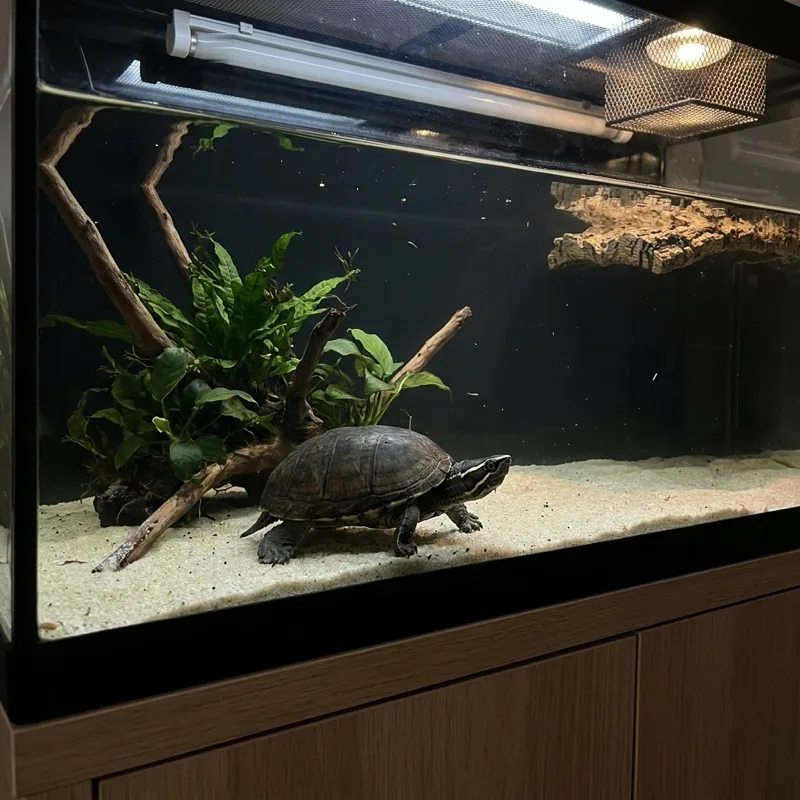
- Box turtles do best in a large, secure, predator-proof outdoor pen with soil, leaf litter, dense planting, hides and a shallow water area, in a suitable climate.
- Indoors they need a spacious open-topped turtle table of at least 120x60 cm, never a small glass tank, with deep, moisture-holding substrate for burrowing.
- Provide a basking spot of 29-31C and a cooler retreat, plus a UVB lamp indoors for shell and bone health, turned off at night.
- Crucially, maintain high humidity (around 60-80%) and a constant shallow water dish, as chronic dryness causes eye, respiratory and kidney disease.
- Healthy adults brumate in cool conditions outdoors.
Supplies
Setup
- Enclosure
- Heating and thermostat
- UVB fixture and bulb
- Thermometers and hygrometer
- Substrate and decor
Ongoing
- Quality aquatic turtle pellets (carnivorous formula for musk turtles)
- Frozen or live earthworms, shrimp and snails
- Leafy aquatic greens or romaine for the omnivores
- Floating cuttlebone
- Separate feeding tub
- Fine net for removing uneaten food
- Feeding tongs
- Kitchen scale for tracking growth
Safe substrate: Topsoil and play sand mix · Coco fibre and coir · Cypress mulch
Care routine
Daily
- Check humidity and damp the substrate
- Check temperatures and humidity
- Fresh water bowl
- Look the animal over
- Spot-clean waste and uneaten food
Weekly
- Feed to the species' scheduleevery 2 days
- Check the basking dock
- Hand-washing and food-area check
- Test the water
- Water change and debris vacuum
Monthly
- Weigh-inevery 2 weeks
- Deep-clean the enclosure
- Rinse the filter media
- Test thermostats, lamps and guards
Less often
- Refresh the substrateevery 3 months
- Replace the UVB lampevery 6 months
Vet: Annual exam and faecal check — every 12 months
Top resources for more info
Independent creators and organisations we would send a friend to. We have no affiliation with any of them, and nothing here is sponsored. Links checked 2026-09-19.
YouTubers
Sites
Go deeper
Diet
- Eastern box turtles are true omnivores with a varied appetite.
- Offer a rotating mix of gut-loaded insects and invertebrates such as earthworms, snails and roaches, alongside leafy greens, vegetables, mushrooms and a portion of fruit, which they take more readily than tortoises do.
- Variety is key to avoiding deficiencies, and dusting food with calcium supports shell health.
- Vitamin A matters; deficiency causes swollen eyes and respiratory problems.
- Always provide a shallow water dish for drinking and soaking.
- Avoid monotonous diets, fruit-heavy feeding and any reliance on processed foods.
Health
- A healthy box turtle has clear, open eyes, a firm hinged shell, alert behaviour and a steady appetite.
- The classic captive illnesses are vitamin A deficiency (swollen eyes, runny nose), respiratory infection and shell rot, most often caused by low humidity, poor diet or inadequate UVB and warmth.
- They hide stress and illness well, so subtle appetite or activity changes deserve attention.
- Brumation is natural for healthy, well-conditioned adults but risky for sick or underweight animals.
- They can carry Salmonella, so practise good hygiene, and use an experienced exotics vet for faecal checks and any concern.
Is your enclosure big enough?
Is this urgent?
For aquatic turtles the water quality is half the medical history.
Go now
Today
A turtle needs a basking site that gets it fully dry and properly warm. Half the common problems trace back to a dock that does neither.
This is general guidance for a healthy adult, not a diagnosis. An exotics vet who knows your animal always overrides it — and the time to find one is before you need one.
Can a eastern box turtle eat that?
Reptile diets split hard by species. An insectivore and a grazing tortoise share almost nothing, so check the species guide as well as this list.
The full list
Never (15)
Rare treats (1)
Occasional (5)
Everyday foods (6)
That food is not on our list. Reptile diets are narrower than they look — check the species guide, and ask an exotics vet before offering anything unfamiliar.
Dust feeders with a calcium supplement to the schedule in the species guide. A reptile can be eating well and still be starving of calcium.
What it really costs
Setup, monthly, first year and across a whole life, itemised and with the electricity worked out from the actual wattage. Published figures for the same animal disagree by a factor of four, so the calculator shows ranges rather than picking one.
Bedding and substrate
Substrate choice follows the animal's natural humidity, not the look of the vivarium. Get that pairing right and most substrate arguments disappear.
Safe
With a caveat
Never
This is our general list for reptiles. We have not built one specific to Turtles yet.
Impaction is far more often a temperature problem than a substrate problem: an animal that cannot reach its digestive temperature will not pass what it swallows, whatever it is standing on.
Compare with other animals
The same axes for every animal, side by side — the way the guides are written makes that a fair comparison rather than two articles.
Turtles, side by side
Same axes, same care guides — the honest way to choose between types.
See all Turtles side by side →